
Blog
Product updates, guides, and customer stories.
 Guides
ICU and MessageFormat 2 in i18next: typed arguments, linting and the App Router
i18next has supported ICU MessageFormat through i18next-icu for years, and Unicode MessageFormat 2 through i18next-mf2. In October 2026 both became first-class options next to the i18next format: debug warnings when syntaxes are mixed, type-checked ICU and MF2 arguments, an i18next-cli mode that extracts one key per message and lints plural categories per locale, IcuTrans in React Server Components, and next-i18next providers for the App Router. What changed, with code that runs.
 Guides
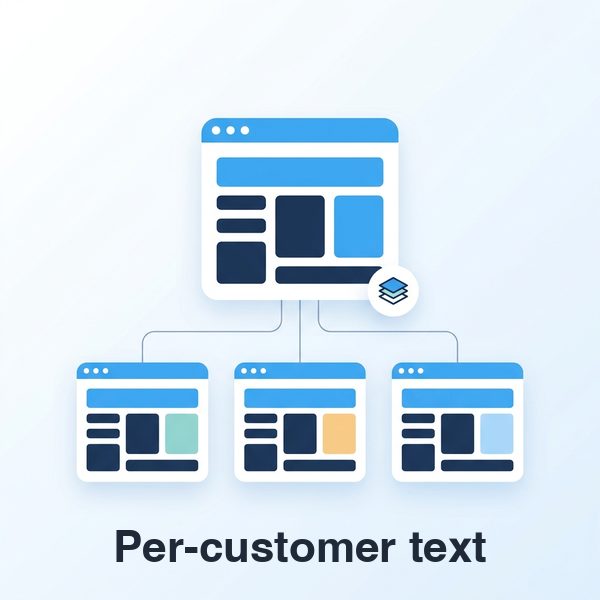
One product, many customers: per-customer translations with tenants, a worked example
White-label and B2B products often need the same app with each customer's own wording: "client" instead of "patient", a different cancellation policy, the customer's name instead of yours. The ways teams handle it (copies, custom locale codes, namespaces, interpolation, tenant projects), and a real run with one base project and three customer tenants: overrides, what happens when the base changes, how the app loads the right customer, and what to watch.
 Guides
How to choose a TMS in 2026: pricing models explained, one project priced at nine vendors
Translation management systems meter different things: words in all languages, words in target languages, processed words, source keys, strings or seats. We priced one reference project (2,000 keys, 6 people, 3, 8 or 15 target languages) at nine TMS vendors, Locize included, from their public pricing pages on October 13, 2026. What each pricing model rewards, where it gets expensive, and what the list price leaves out.
 Guides
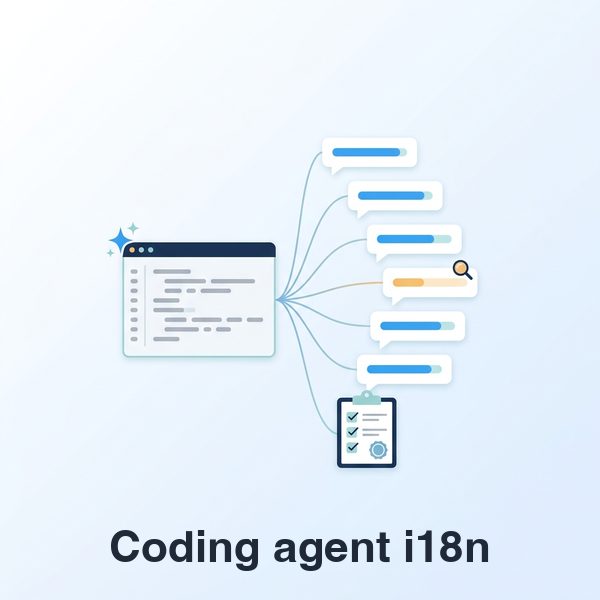
A coding agent localizes a feature: confidence scores, review and the record, step by step
A real run, not a diagram: Claude Code adds a snooze feature to a React app, reports eleven keys to Locize over MCP, and gets them back in six languages within seconds, each with a confidence score. What the scores caught, what they missed, what the agent fixed by itself, what the review still changed, and what the provenance export records about each string.
 Guides
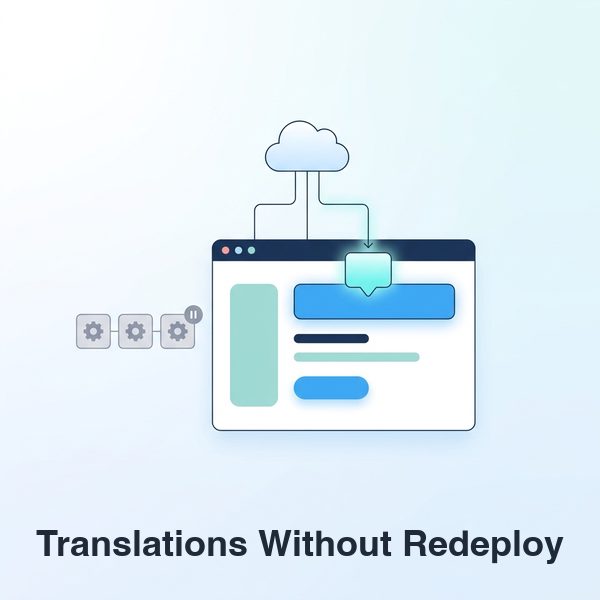
Update Translations Without Redeploying: Runtime Loading, Caching, and Why Users See Stale Strings
How to change the text of a web or mobile app without shipping a new release: load translations at runtime instead of bundling them, and understand the caches (browser, service worker, localStorage, CDN) that decide when users actually see the change. Covers i18next backends, Cache-Control, the usual reasons translations do not update after a deploy, and when bundling is still the right call.
 Guides
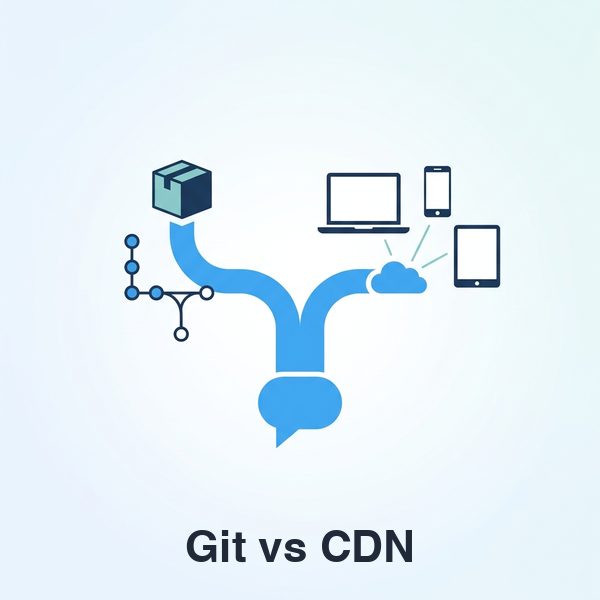
Git-synced translations vs runtime delivery: which one fits your CI/CD pipeline?
Translation files kept in git and synced through CI, translations loaded from a CDN at runtime, or both? How each architecture works end to end, an honest decision table (who edits, release cadence, SSR and offline, pull-request review, rollback, CDN cost, confidential strings, native mobile), how teams run it today, and what neither approach solves.
 Guides
The EU AI Act transparency Code of Practice: who signed, and what it means for translated content
As of September 9, 2026, the European Commission's Code of Practice on transparency of AI-generated content lists 83 provider and 152 deployer signatories, and the list keeps growing. What the Code is, what signing commits a company to, why not signing is not non-compliance, and what it changes, and does not change, for machine- and AI-translated websites and apps under Article 50.
 Guides
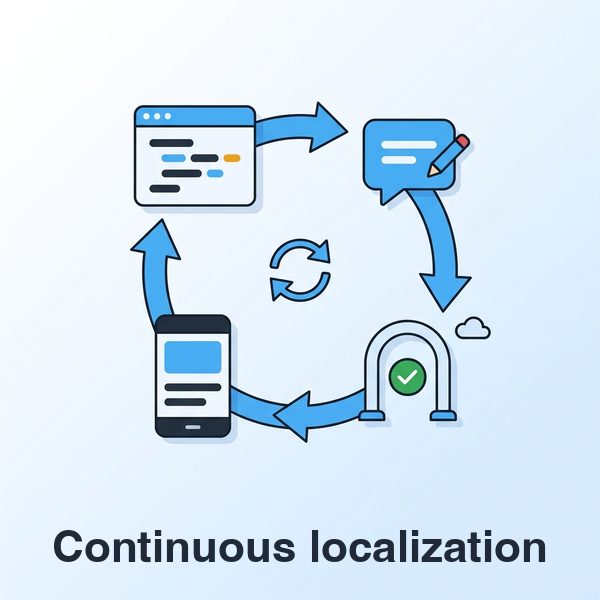
What is continuous localization? Definition, workflow, and what it does not mean
Continuous localization is a translation workflow that runs in parallel with development: new strings flow from the code to translators or AI automatically, and approved translations reach the running application without a release. The definition, the four stages, how it differs from batch localization, what you need before it works, and what it does not solve.
 Guides
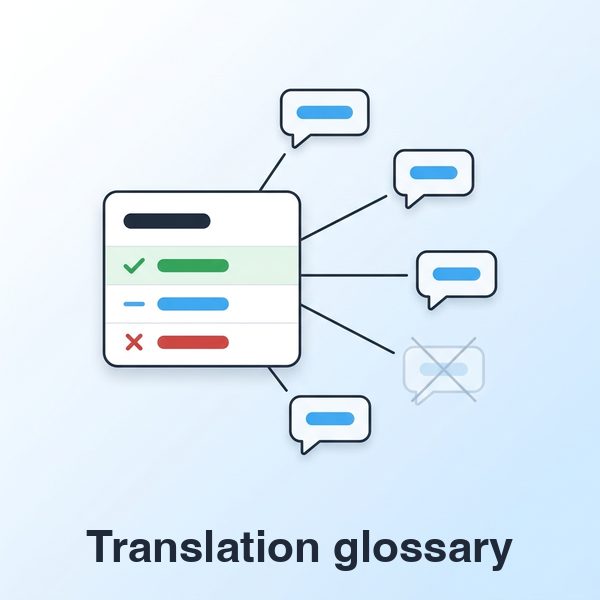
What is a translation glossary? Definition, examples, and how it is enforced
A translation glossary is the list of terms a product must translate the same way every time, with the approved translation per language. What belongs in one (preferred, allowed and forbidden terms), how it differs from a style guide and from a translation memory, why machine and AI translation need it more than human translators do, how it is enforced with automated checks, how teams build one, and what it does not fix.